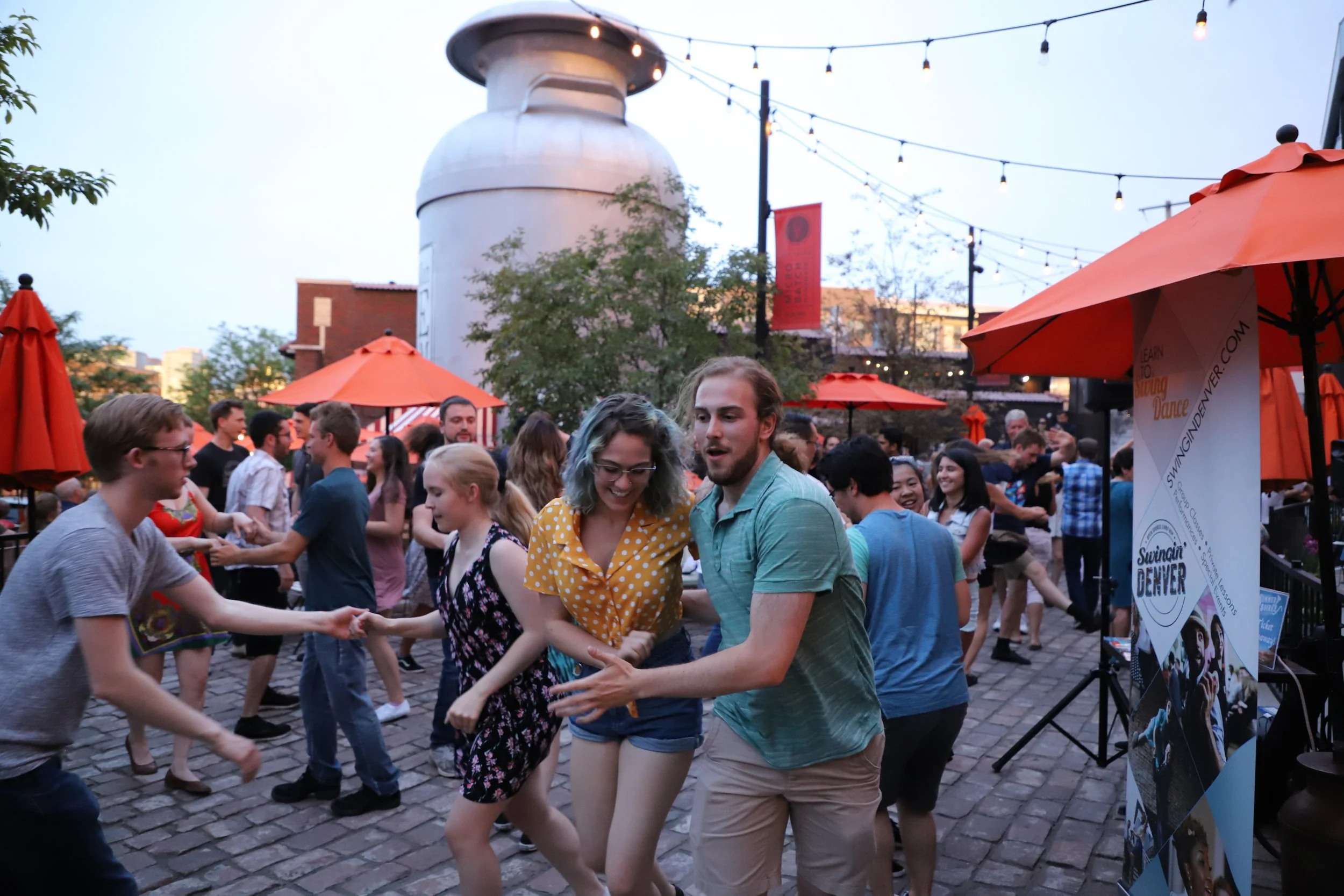
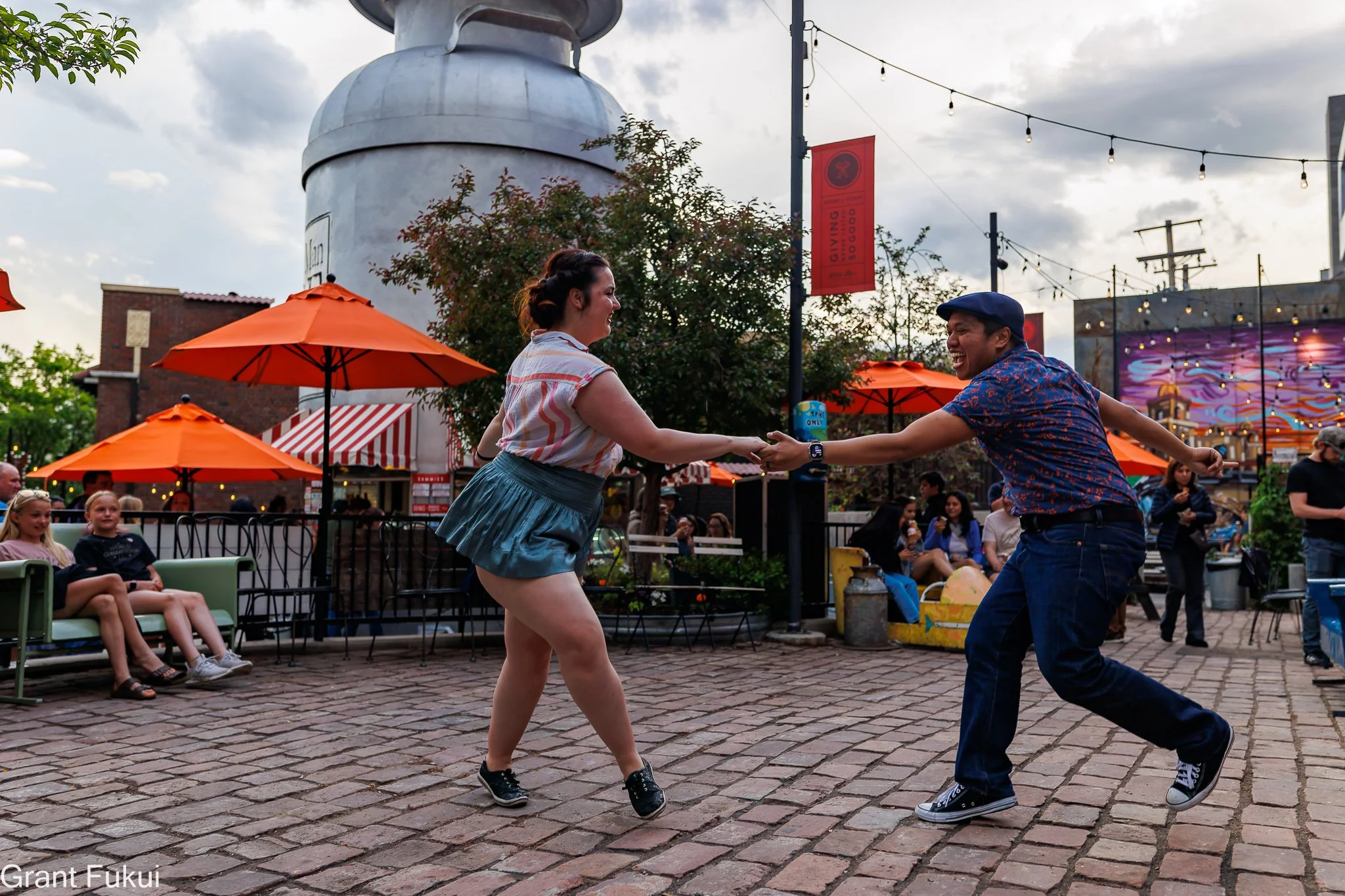
It’s simply great to see the level of outreach Boulder Swing Dance and Dance Laugh Love are doing in a variety of Facebook groups and we simply want to see more swing dance school organizers do the same.

Dance Musings
Kenny was recently asked “how event organizers decide who to DJ for their larger events. And how I can get on their radars?” and here are his brief thoughts as an organizer and someone who’s been hired for national and international DJ gigs.
Actually, be a disc jockey. It’s okay to start with a playlist, but I want to see someone that is playing to the crowd, adjusting music on the fly, getting people out of their seats with the music you choose. A “create a playlist prior to the event and let it sit” is not a DJ.
Someone that gets people to dance inspired. Mpst people show up to a dance to socialize and to dance. To get someone to dance inspired is another thing entirely.
Be active in relevant groups. It used to be discussion boards and now it’s Swing DJs. If I was interested in scoping potential talent, I might check out DJ groups and see who is participating and how.
Cold emailing organizers and having reputable teacher and/or organizer talent that can vouch for you and offer those references when you first reach out. Less work an organizer needs to do, the better.
Read other DJs blogs like Dogpossum and reach out to other DJs getting hired to see what knowledge you can glean
Reach out to online DJ events like Global Online Social hosted by Pauldances and put yourself out there.
Consider building a resume/CV like my dance one here.
Have a blog sharing your passion.
DJ for a local event that out-of-town guests visit for.

My first prominent swing dance instructor once told me to teach Shim Sham in the group class starting on the “1” because it’s easier. That explanation made ready sense to me as a newer dance teacher. Most, if not all, dances taught at this ballroom studio with the only all-ages swing dance in metro Kansas City started on the “1.” It never occurred to me that, as a dance educator, I could make finding the “8” easier for students. It did mean the Shim Sham was a hot mess when Frankie Manning came to town and led everyone in it (note: As I anticipated this train wreck, I hit “play” on the song and just watched).
I feel the same entrenched reasoning might exist for vernacular dance instructors still billing classes as “jitterbug” or “east coast swing.” These are marketing terms popular back in the late 1990s and early 2000’s when neo-swing was on the rise and white dance instructors, like mine in KC, saw those words as a way to get new students to gravitate toward their classes and swing nights.
Even here we used “Jitterbug” as a way to label drop-in classes at the Arvada Tavern 6-7 years ago. Our thought process was akin to “if the Mercury Cafe, seen as the OG’s of the scene, is using it to sell classes, why not us?” Well…

Google Trends shows that people want to learn how to swing dance, specifically Lindy Hop. Even Instagram hashtag usage shows us what captivates people. Plus, as the below image shows, most people search “Jitterbug” for the cellular phone which debuted in 2006. Besides, maybe people just inherently know that a jitterbug just isn’t that cool unless you’re in specific regions like LA or Las Vegas where being a jitterbug is a badge of honor. Otherwise, “Jitterbug is primarily the white ghosting of a black dance,” a white thing and not as smooth as lindy (Frankie Manning in Margaret Batiuchok’s dissertation), uncouth, and an alcoholic drink giving you the jitters.

So, if you purport to teach swing dance within the vernacular scene (Vernacular refers to dance performed to the rhythms of African American music: dance that makes those rhythms visible - “Steppin’ on the Blues” by Jacqui Malone), then I’d highly encourage teachers to:
Specifically name what you’re teaching whether that’s Lindy Hop, Balboa, Collegiate Shag, Vernacular Jazz, Charleston, etc
Stop billing classes as Jitterbug or East Coast Swing. To borrow from Margaret Batiuchok’s dissertation once again - Jitterbug means different things to different people. Lindy means one thing. And East Coast Swing belongs to the ballroom dance community and was stripped of pretty much all vernacular values
Make it easier for people to find Lindy Hop and other vernacular dances. By appropriating Lindy Hop and other Black dances, and renaming them to suit your needs, you’re making it harder for people to find Lindy Hop and discover the tenets of vernacular dance.
The main reason why I think people stumble over Lindy Hop’s varying pattern lengths and varying rhythms (triple steps, stomp offs, slows, quicks, etc) is because of dance instructors billing patterns using slows and quicks as east coast swing or jitterbug. This leads to a dissonance where dancers think these rhythms and some patterns live on islands separate from swingouts or triple steps, for example.
If you’re dancing with vernacular dance hallmarks and striving to impart these characteristics such as improvisation and spontaneity, propulsive rhythm, call-and-response patterns, self-expression, elegance, and control to your students while dancing to solid swing-era music, you ought to calling what you’re teaching Lindy Hop. Just do it.