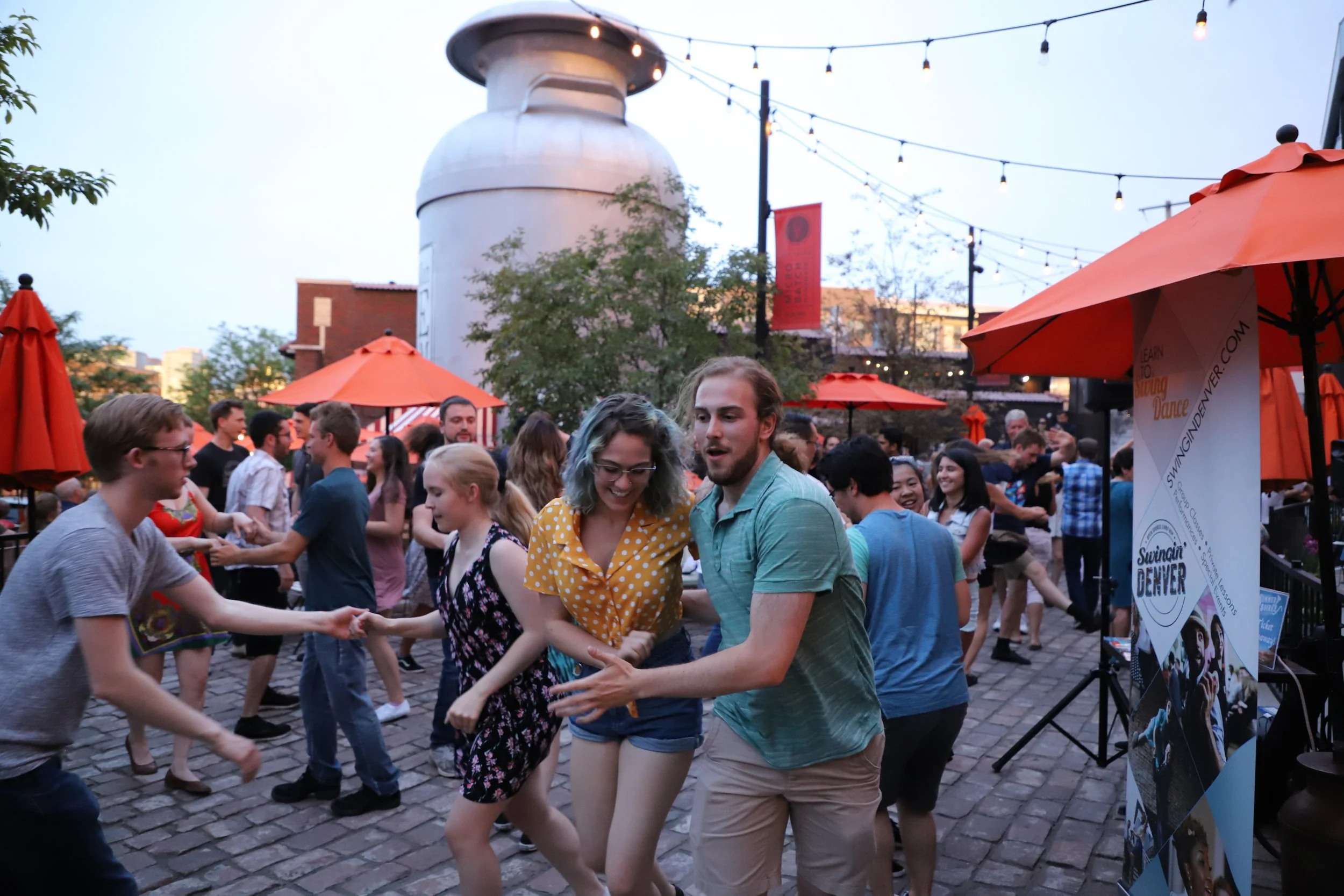
social dances

Moving Together Across Generations

I recently learned about Swing Riot in Dunedin, NZ because someone shared they’re really good about incorporating families and children at their events. This sparked my curiousity and I learned this was part of their kaupapa, defined as: “Kaupapa means principles and ideas which act as a base or foundation for action. A kaupapa is a set of values, principles and plans which people have agreed on as a foundation for their actions.” Our contact there shared - “Our kaupapa for Swing Riot is to teach and promote the music and dance and share its history within our wider community so I see doing events for our smaller folks as part of that.”

I truly enjoy this concept and how it’s incorporated at Swing Riot. This information also came at a time when I’ve been thinking about how accessible swing dancing can be across generations and ability levels.
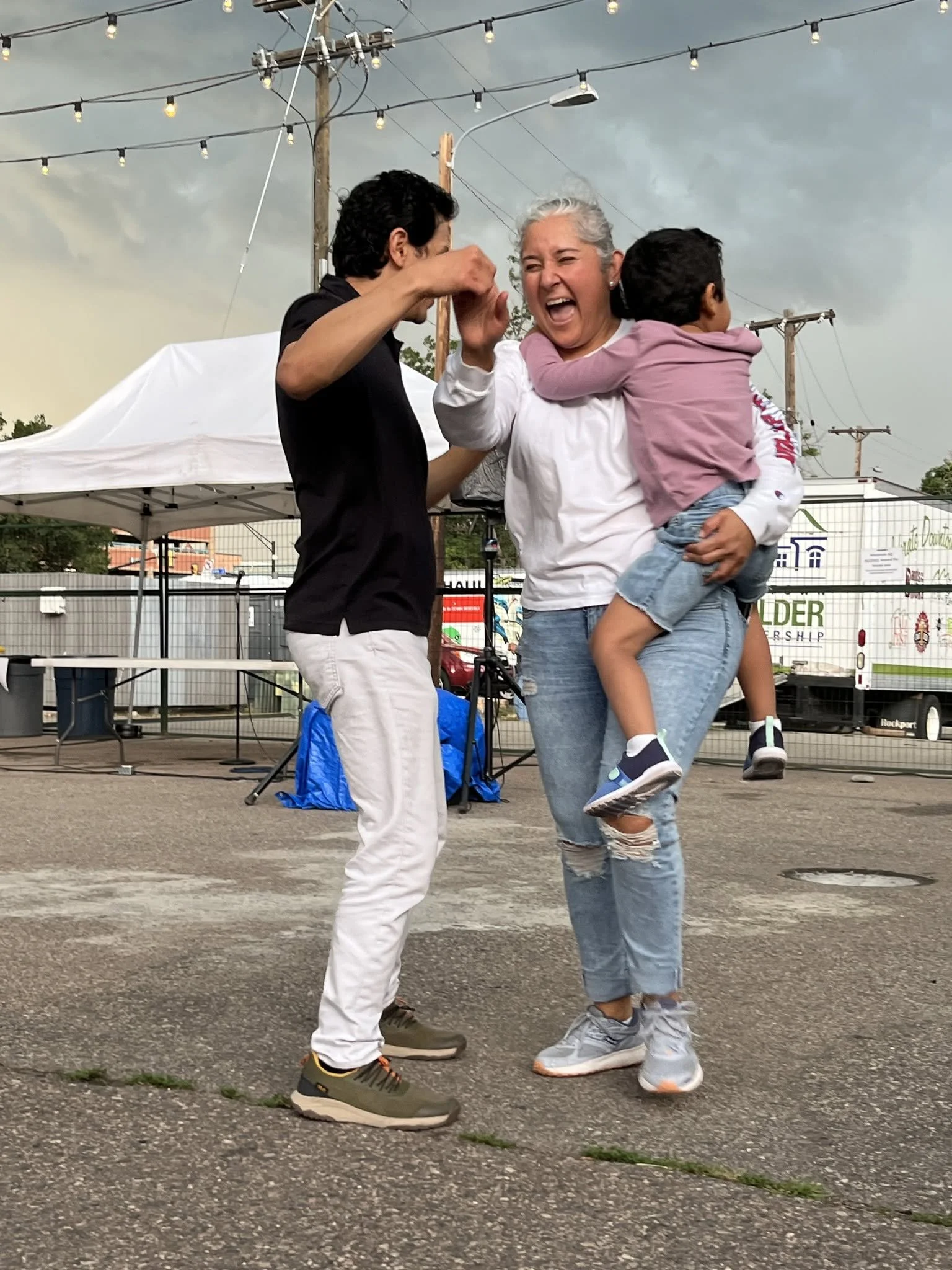
Three generations dancing together

I don’t know about you, dear reader, but how many times have you been experienced the questions of - isn’t Lindy Hop fast, athletic, rhythmically-challenging, bouncy, for young fit people? While it can be all those things, Lindy Hop can be so much more - chill, cool, smooth, glidey, elegant or calm. These are just some of the reasons why we strive to demo a variety of ways to move your body while teaching diverse rhythms so you have tools to express yourself. Though sometimes the best tool could be saying “no, this song isn’t for me” :)

Regardless of where we teach, we strive to meet students where they’re at so they can have a good time dancing with each other. Holding a child? Take your time through a turn. Double amputee? Ask for balance support and let’s see what rhythms suit you. Injured right wrist? Let’s only use the left and see how creative we can get. Dancing on cobblestone? Let’s be chill, swing the rhythm through our bounce and forgo certain rhythms. Name of the game is mutually caring for each other and finding freedom with each other. Dancing Lindy Hop spans all ages and all abilities.

Everyone's a Dancer

Something Moncell Durden said during his first Stormy Weather Jazz Festival talk got us thinking about how we raise our kids and manage our dance classes. Due to a lack of notes during this section, we’re running off of memory but it basically came down to - treat kids like they’re people because they’re smarter than us just taking in all this readily available information until they’re ready to showcase their gleaned knowledge.

In contrast, I used to teach as if students, especially newer ones, were tabla rasa or blank slates. Our methods were based on conformity and only later in their dance journey (if they stuck around) would we talk to students about expressing themselves, musicality, individuality, being non-conforming. We’d also simplify movements sometimes to the students’ detriment that we’d fix later on (if they stuck around). We’d also avoid topics viewed as difficult because this space was “the home of happy feet.”

Instead, and we delved into this topic matter in our Jazz With A Beat class at Stormy Weather, we treat people as dancers, capable of movement as we’re all movers. So we remove the expectation that swingouts finish in a prescribed manner (360° rotation start to finish, followers exiting sideways/forward/back); that Lindy Hop equals triple steps, or that we hold each other’s bodies so. We become more focused on encouraging people to bring their selves into the dance and ask questions of the students such as “could you react well into the next pattern, did anything hurt, did you like your choices” while encouraging experimenting, being open to “failure,” and treating each partner as unique. While we’re using the Design To The Edges concept as teachers, we’re also encouraging dancers to design their dances to the edges rather than the mythological average.

We’re all different as individuals, we’re all the same because we’re movers.

Social Dances Have Names

Some of the shortest statements are the most impactful ones. When Taylor Madgett at Dance Dance Evolution firmly stated “Black social dances have names” at the beginning of her class when she was contrasting Black social dances with studio dance, it lodged into my brain. Much like - “The term vernacular refers to dance performed to the rhythms of African American music: dance that makes those rhythms visible.” from Steppin' on the Blues - this statement has become a touchstone for my teaching and teacher instruction, most recently being shared during our Little Man Ice Cream Swingin’ Under the Stars teacher training.

As my co-instructor pointed out during the teacher training, we both get a little irked when we see local swing dance schools continue to teach East Coast Swing and Jitterbug classes. As another school’s instructor shared when asked what a Jitterbug lesson was - “It was east coast. I asked why it was called a Jitterbug lesson and he said because it is very beginner swing dance. And the most important descriptor that stood out to me was that [name redacted] said that it’s very white. Like the most white. That it’s up pulse instead of down in the ground like lindy hop.”

"Nowadays if you say Lindy Hop there are very few people who know the word. You know you say Lindy Hop and they just look at you you know. What is that? And then you say uh jitterbug and their face light up because they have heard Jitterbug for so long till they think that's what it is." - Frankie Manning in Swingin' at the Savoy: The Frankie Manning Story.

But why then, when I took dance classes in school, was I not told that Lindy Hop came from the Black community?

This separation (Jitterbug = beginner swing dance) and centering in whiteness does more harm than good within our vernacular dance community. Lindy Hop is easy to learn, difficult to master. However, thanks to particular instructors and swing schools, we have many people that think Lindy Hop is hard, fast, too athletic because we have this “different dance” over here that is an appropriated commodified version of Lindy Hop further distilled (“tamed”) from what Arthur Murray originally did. I was in the thick of it in the 1990s and know why Jitterbug happened. It’s surprising JItterbug’s legacy has lasted this long since neo-swing crumpled and Jitterbug is attached to my parents’ and grandparents’ generation. As Gaby Cook wrote here, “Language like ‘East Coast Swing’ belongs to the practice of white people siphoning black innovation and repackaging it as a ‘safe’ white cultural product.”

From one swing dance school’s website

"The key elements are the implications that the jitterbug was a dance that was out of control, whereas the Lindy Hop was indeed a theatrical performance, one that Martins attests that "of all the ballroom dances these prying eyes have seen, this is unquestionably the finest; but let the white man attempt it at his peril." - The Oxford Handbook of Dance and Theater.

The other reasons that Jitterbug and East Coast Swing lessons are still pervasive with schools that teach Lindy Hop and other vernacular dance styles are likely marketability, white comfort, organizers resistant to the work involved when evolving, holdovers from the late 1990s neo-swing era, and whitewashing of Black history.

If we are to be better guests in Black social dancing’s house and, rather than be cultural appropriators, be cultural surrogates as defined by LaTasha Barnes, then changes need to be made.

  • Swing dance schools ought to stop branding Lindy Hop classes as East Coast Swing and Jitterbug. Since Lindy Hop comprises of many different visible-on-the-dance-floor rhythms, teachers should be comfortable teaching and dancing a variety of rhythm patterns including step, step, rock step while folding it into vernacular dance values like call-and-response, improvisation, the aesthetic of cool, etc. Let’s start avoiding the neo-swing era with its further appropriation and commodification of Lindy Hop now.

  • When renaming your class “Lindy Hop Taster” or “Level 0 Lindy Hop,” accompany your marketing with appropriate school-sourced video of teachers dancing what your school will be teaching. Include appropriate fun imagery, emphasize the beginner-friendliness of what you’ll be teaching and make some statements on social media and your website about why you’re making the change. Perhaps this will make your classes more accessible and inclusive.

  • Continue to educate. Your website and social media presence should be a resource and a marketplace. Many people treat their social media platforms as places to sell things, but it should also be a resource. And then make sure your classes are educational on several fronts - music, history, dancing, consent, etc.

We can do better.

Another school’s website where they center Black social dances with their origins and using the dances’ names.