
Teaching

Pottery & Lindy Hop - Philosophies Merge

Today I attended the O’baware Summer Sale in Lafayette. Not only did I find excellent pottery to purchase, but I had the opportunity to listen to Kazu Oba, the Japanese-trained pottery artisan, talk about his methods and philosophy.

One particular element struck me was when he was talking about the piece pictured in this blog and I’ll try to be accurate as much as possible with this retelling. This particular piece is shaped cylindrical on the wheel with the vertical lines representing Kazu’s fingers as he draws the material upward. At some point he slices this cylinder into three pieces and drops the wet clay from a slight height for it to flatten.

However, the clay remembers that it was round and part of a whole so it tends to recoil round, so Kazu must work it flatter, but you’ll still see the edges curl upwards. The clay remembers.

This is in contrast with other potters that might start with a flatter piece of clay and try coiling the ends. However, Kaza was saying something akin to him not wanting to impose his will on the clay. He prefers his method of providing the clay a memory and guiding that memory to form something unique. This was my takeaway.

This led me to reflect briefly upon dance teaching. While these thoughts aren’t fully formed, I’d say there is a remarkable difference between how I was trained to teach ballroom dance (specific foot placement, specific technique, specific syllabi, imposition of will) versus how we teach Lindy Hop (acknowledging ambiguity, welcoming expression, striving to improve those triple step rhythms and moving from core). You can bring your lived experiences to vernacular dance and they can inform your interpretation of your teachers’ expressed philosophies whereas ballroom (I’ll acknowledge not all) can be cookie-cutter and formulaic.

Sometimes one style works best for a person. Sometimes you start with ballroom and move to Lindy Hop, sometimes you move the other direction. And I think it’s good to offer options so dance can meet people where they are at.

The Dance is Called Lindy Hop

Here's an excerpt from a conversation about urban dance that we can see reflected in current naming struggles within the Lindy Hop community. "Urban is problematic because it is not a racial term. It eliminates race. You're taking away the people from the dance."

You can likely draw a line from this statement to swing schools and instructors utilizing terms such as "jitterbug" or "east coast swing" to label classes teaching Lindy Hop with slow and quick rhythms. Whether their intentions are good or not, the more we get away from the origins, the more we erase Black ownership. And, while names change as things evolve, what people call "east coast swing" or "jitterbug" was a devolving or simplification of Lindy Hop.

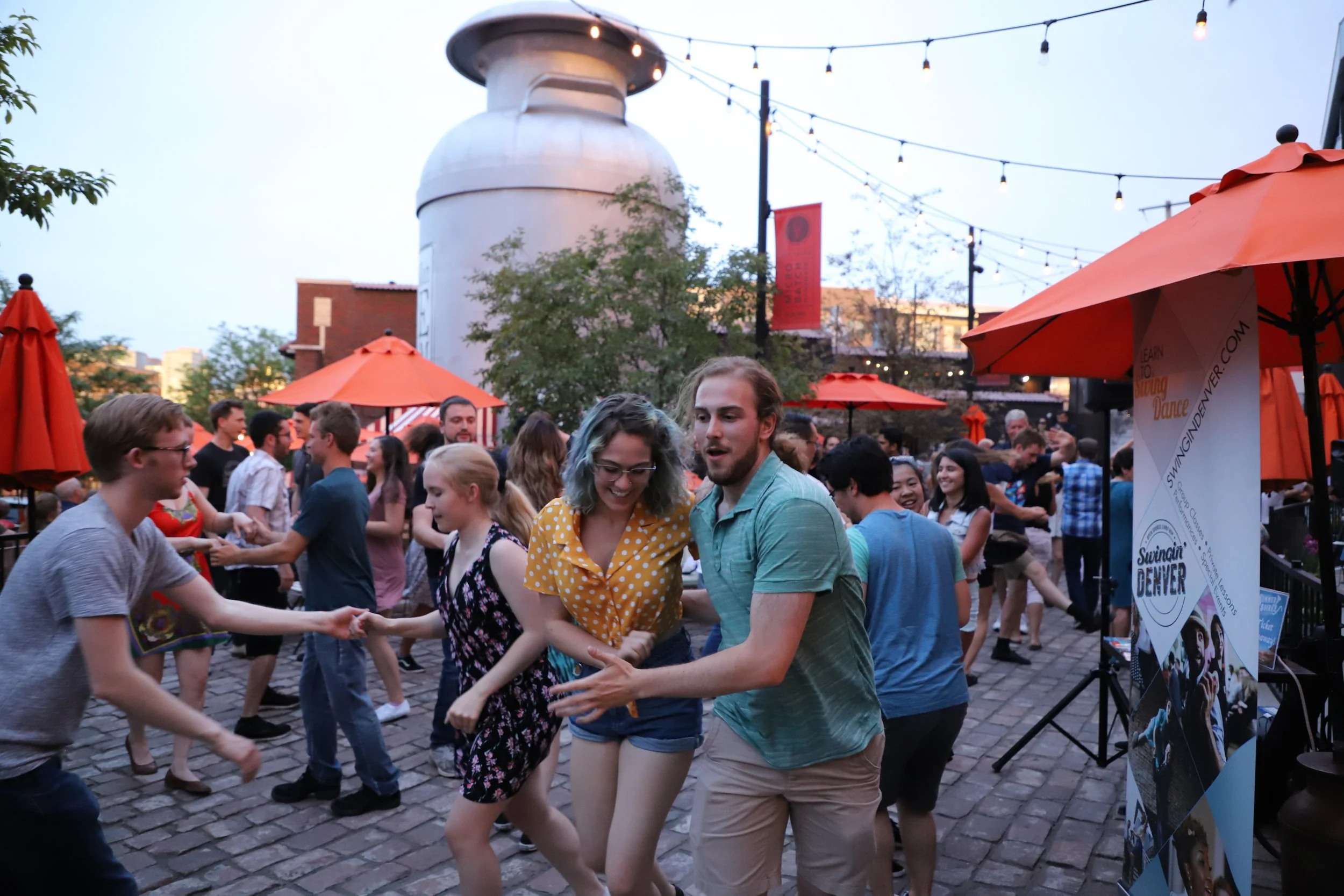
Swingin' Denver has long since scrapped our own Jitterbug classes, but up until 2019, we had called the beginner swing dance classes we taught at outdoor events "beginner swing dance," jitterbug" or "east coast swing." We did not call it Lindy Hop.

Only after a lot of reading and listening during the pandemic did we make the switch which has been even more emphatic this year. My thoughts and feelings had finally firmly coalesced that we would confidently state we are teaching Lindy Hop with its vernacular dance hallmarks while teaching a particular rhythm (slows and quicks) danced to excellent swing music.

I'm happy to be in this spot since we are now more consistent with what we offer, believe and support. We could not celebrate Lindy Hop, a Black social dance, in one hand and erase the Black origins in the other.

We still have more growing and learning to do, but I wanted to share these thoughts with our audience. I hope other swing dance school will reach these conclusions soon.


Allowing Students Space To Find The Dance

One thing I've learned over the years, and this could be why I gravitate toward or value particular teachers, is to provide space for students to find the dance. From Peter Strom - "Many people come absolutely bereft saying 'please tell me what to do.'" And this is a fine place to be. After all, students are coming to learn, start a new hobby, join a community.

It's the teachers' job to teach culture, movement vocabulary, music appreciation and more, and then step aside. This could take the form of playing whole songs for the students to dance to, providing time for students to workshop ideas, or teach patterns that encourage call-and-response from students.

And then provide encourage, shout praise, give a thumbs up, make eye contact and nod "I see you," bring students up to demo what they've accomplished and/or created, or even dance demo what you saw from students as a way of encouraging greater exploration and then quickly turn the music back on.

As I state in the teacher trainings I lead - Lindy Hop is dynamic, full of choices, and ambiguous at times. You just have to believe your students are capable and project that belief to them, so they can believe it to and become independent dancers dancing as themselves.

Call-and-Response - In The Pocket

Last Friday, I attended a staged reading of Jeff Campbell's new play "In The Pocket: The Ballad of Bobby Trombone.” at The Savoy Denver. This was a collaboration between Emancipation Theater and Theatre Artibus.

One section that stood out was the first time Shane Franklin broke out his tap shoes to involve the audience by rhythmically tap dancing and getting us to respond with “in the pocket.” In the pocket, as you can likely guess from the play’s title, was a recurring theme. Since things can get lost in writing, I’ll say it was very similar to Frankie Manning calling out “uh1, uh2, uh you know what to do” - very rhythmic, timed, leaving space for the response of Shane’s taps’ calls to audience members. Innnn the Pocket.

And that got me thinking. Can we at Swingin’ Denver get our students more audibly involved in a similar way? And could that help them find Lindy Hop’s pocket?

Uh 1 Uh 2
We Know What To Do!

Food for thought

March 2022 Class Playlist

I am ridiculously pleased with the amount of music we played opening night in both our Intermediate and Beginner Lindy Hop classes! 50+ minutes were played and we were maximizing students’ dance time. The same goes for Boulder Swing Dance too!

These are the classes I love to teach and participate in - where it’s movement focused and we can put into practice what we’re learning to music. Anyway, we’re building a Spotify playlist of music below that students are dancing to in class.

Embed Block
Add an embed URL or code. Learn more

Get Out Of The Way Of The Dance

Lindy Hop speaks for itself. It’s wonderfully dynamic, playful and powerful. As Jacqui Malone writes “its hallmarks are improvisation and spontaneity, propulsive rhythm, call-and-response patterns, self-expression, elegance, and control.” A Lindy Hop social dance rarely repeats itself because the partner, the song, and your life experience are rarely the same at that moment in time.

So why do some lindy hop instructors get in the way by trying to share the dance verbally when it’s a physical expression? When teaching, strive to let your dance students experience Lindy Hop through dancing as much as possible, especially dancing to swing music. This is because, as I sit here and reflect on my past dance experiences, there is nothing quite like dancing it out for yourself, dancing through mistakes, and trying to connect to a different partner to a new section of music. Lindy Hop is best experienced kinesthetically.

So let’s dance more and speak less.