
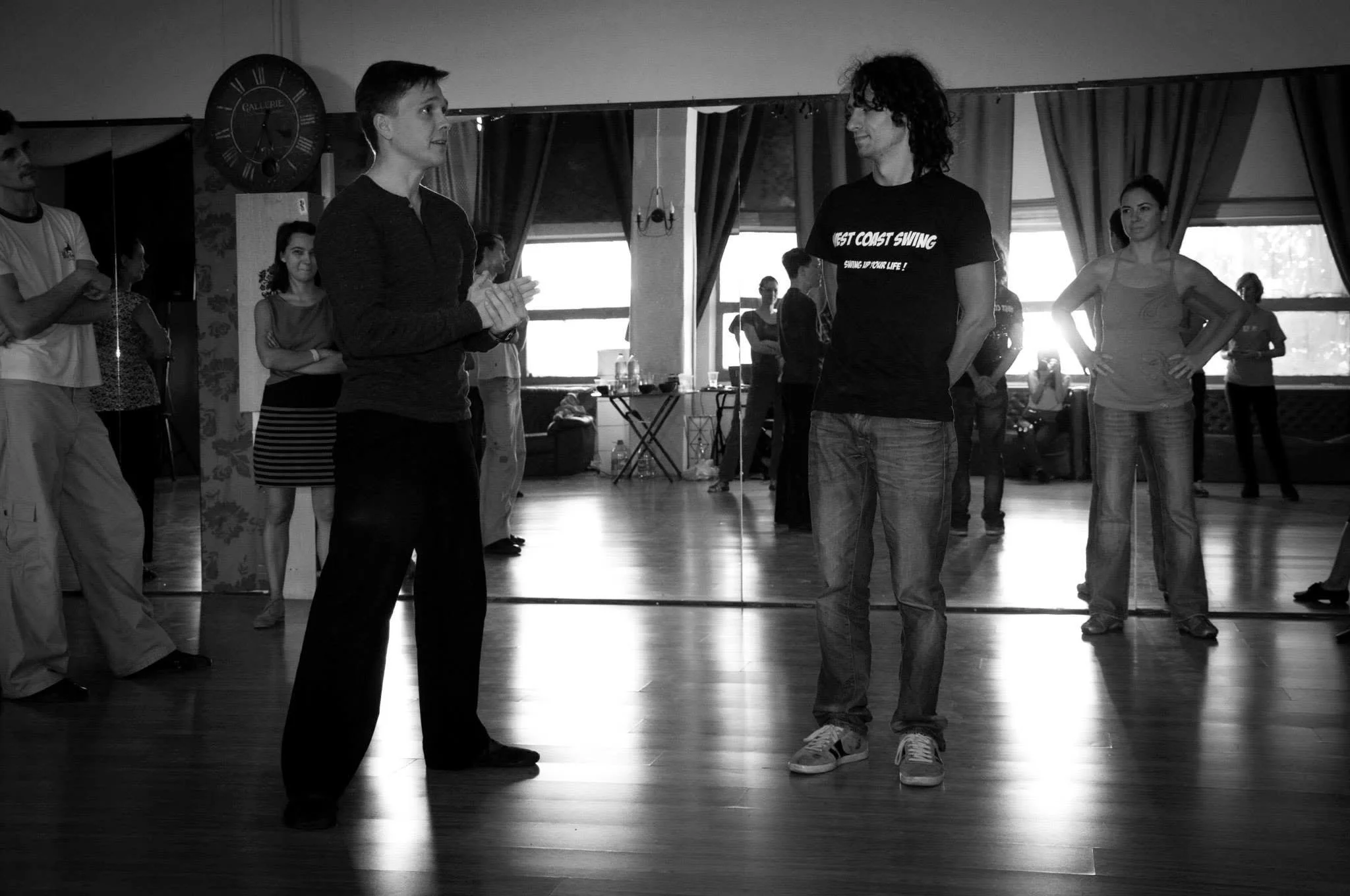
There is a recent thread on the r/swingdancing subreddit that piqued our interest because OP sought teaching tips as they were focused on the question of correcting people. My first thought upon reading was this:
“If your first tendency is to correct, I'd recommend recalibrating. Students should be maximizing unstructured dancing in class without instructor intervention unless they're harming each other.”
And this seem to unsettle some folks as they advocated for desiring correction if they paid for a class. While we’ve been employing Sylwia Bielec’s 70/20/10 model (70% practice, 20% demonstration, 10% discussion), I’ve spent the last couple months watching my son practice soccer and thinking about my desire to intervene or correct him. This has led me to exploring the concept of deep play and how transitions can affect children at play. And here’s a recent video from David Epstein that has provided me more material to ruminate over.
From my perspective, play should be a core part of the Black social dance classroom. During my teaching journey, I used to be focused on the “right” way of doing things and…. there’s not really a right way unless you’re being injurious. Constant interruption disrupts students’ learning and being able to deeply focus and get caught up in the world of swing dancing, connecting with the music and their partner, is really important.
As an example, let's take the swingout: is there one right way of doing of swingout? no. Is there one right rhythm to employ within a swingout? no. Is there a correct amount of degrees for a swingout? no. Is there one correct lead/follow technique to employ during a swingout. no. it's open to a gather where a brief connection takes place with maybe some redirection and developing some away energy across 8 beats. The swingout contains multitudes as does the dancer so let’s let people enjoy their deep play.