Accessibility

Moving Together Across Generations

I recently learned about Swing Riot in Dunedin, NZ because someone shared they’re really good about incorporating families and children at their events. This sparked my curiousity and I learned this was part of their kaupapa, defined as: “Kaupapa means principles and ideas which act as a base or foundation for action. A kaupapa is a set of values, principles and plans which people have agreed on as a foundation for their actions.” Our contact there shared - “Our kaupapa for Swing Riot is to teach and promote the music and dance and share its history within our wider community so I see doing events for our smaller folks as part of that.”

I truly enjoy this concept and how it’s incorporated at Swing Riot. This information also came at a time when I’ve been thinking about how accessible swing dancing can be across generations and ability levels.
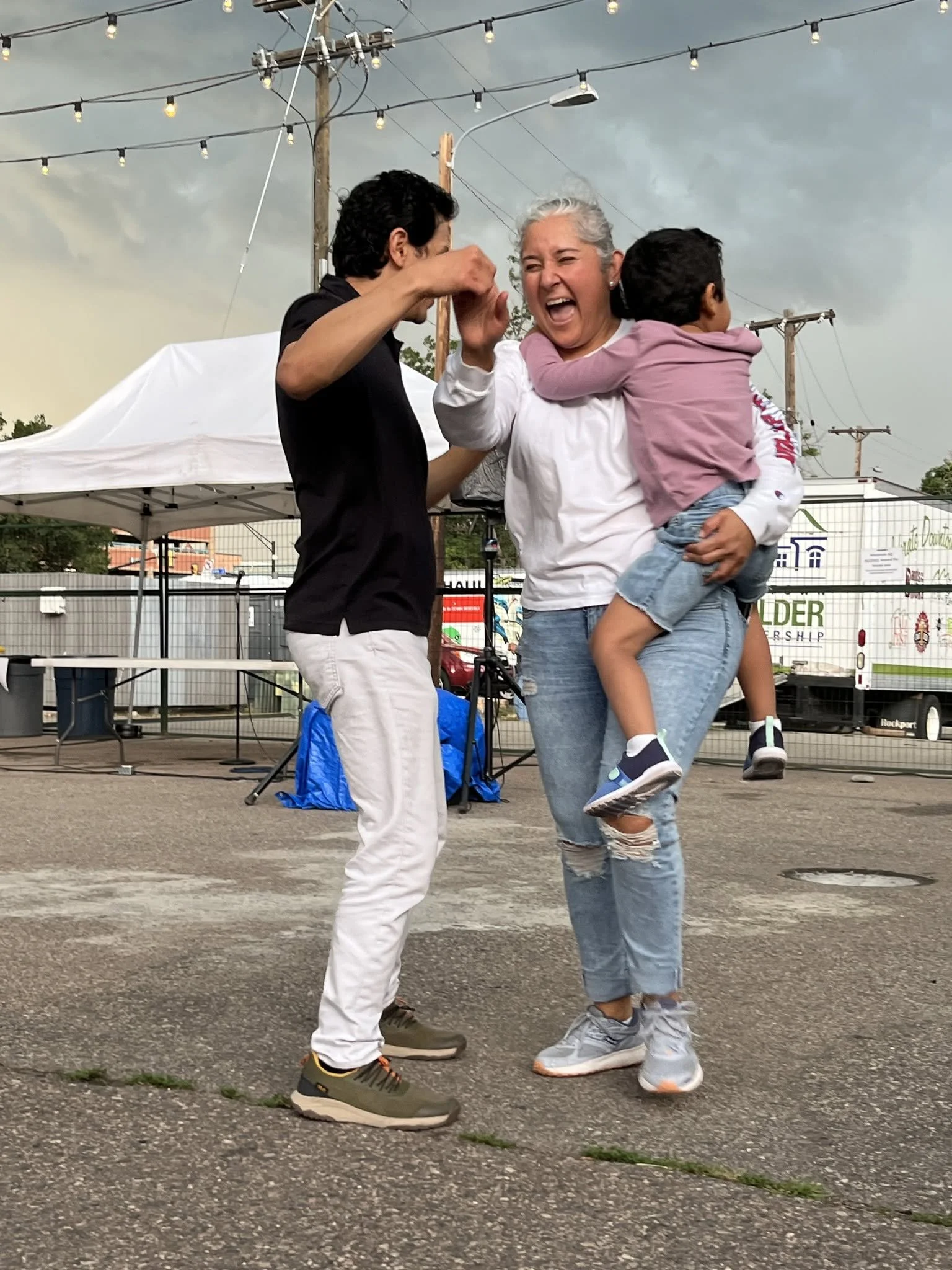
Three generations dancing together

I don’t know about you, dear reader, but how many times have you been experienced the questions of - isn’t Lindy Hop fast, athletic, rhythmically-challenging, bouncy, for young fit people? While it can be all those things, Lindy Hop can be so much more - chill, cool, smooth, glidey, elegant or calm. These are just some of the reasons why we strive to demo a variety of ways to move your body while teaching diverse rhythms so you have tools to express yourself. Though sometimes the best tool could be saying “no, this song isn’t for me” :)

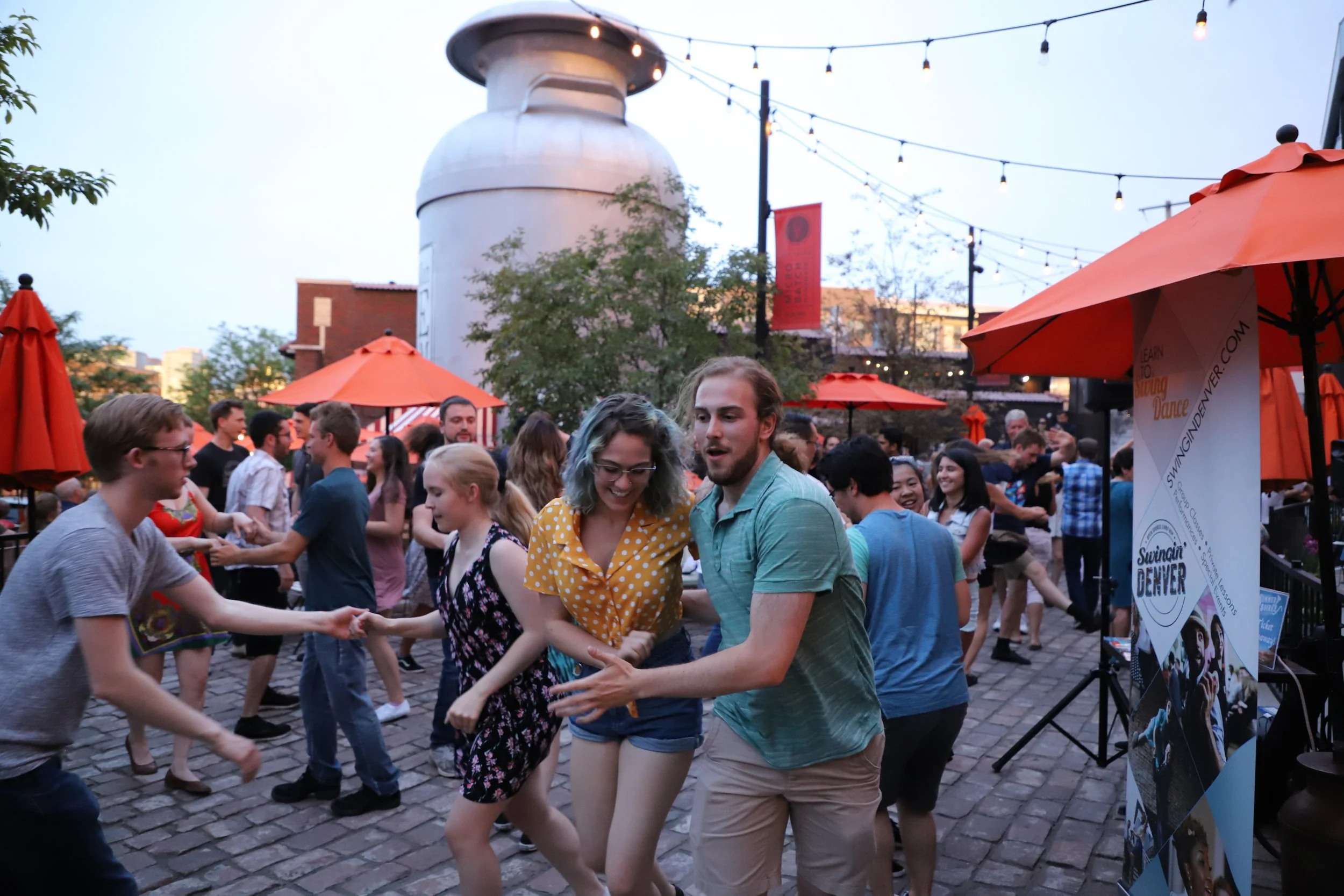
Regardless of where we teach, we strive to meet students where they’re at so they can have a good time dancing with each other. Holding a child? Take your time through a turn. Double amputee? Ask for balance support and let’s see what rhythms suit you. Injured right wrist? Let’s only use the left and see how creative we can get. Dancing on cobblestone? Let’s be chill, swing the rhythm through our bounce and forgo certain rhythms. Name of the game is mutually caring for each other and finding freedom with each other. Dancing Lindy Hop spans all ages and all abilities.

Marketing Materials - are they visually accessible?

Kyle Smith’s feedback on this initial visual design shared on this blog post lives rent-free in my mind especially as a parent - “Kenny, this looks like baby poo brown.”

It’s been ten years since we hosted Percolatin’ Rhythm, a free live music event created to introduce ourselves to the Five Points Neighborhood. I was struggling with the image design and likely lacked a budget to hire someone. It can be a bit rough sometimes not knowing how to express your need for assistance.

Fortunately, that color text against a black background rated a 15.43 according to this Colour Contrast Checker though the choice of an italics font is questionable. Visual accessibility is important for our overall mission to increase accessibility and awareness of Lindy Hop and other Black social dances. Here are some important tools friends have recommended I use.

Photopea

Free Adobe Photoshop equivalent which has an eyedropper tool. If you don’t know the hex color code, drop the file into Photopea and select the eyedropper tool to find out.

Color Checker Online Tools:

Knowing the colors you’re working with, you can use the following tools to assess which color combinations are best. For our branding, especially on Instagram posts, we’ve found it useful to play with Opacity settings in order to create better backgrounds for texts while still allowing the image to “shine” through.

Our preferences are Colour Contrast Checker since you can also test font sizes and types along with Coolors because it has resource material on Web Content Accessibility Guidelines (WCAG).

If I have doubts about my colors or typography (font type, size), I’ll run it by my friends more familiar with visual accessiblity and willing to provide feedback. It’s always important to check in and see if you’re providing all the information necessary for enhancing access for all people.

We Have A Venue Accessibility Form!

We have a venue accessibility form! Big thanks to Max, Von, Noelle and Addie for their contributions shaping this form. You’re welcome to view and perhaps fill out if you manage a venue that already works with us or wants to!

Since our first Lindy Bop event, we’ve been striving to create Accessibility Guides for the various venues where we host events. Others include -

As you can see, they are a work in progress and inconsistently include the venues we’ve worked with since March, 2025. One example is us needing to include parking information for Little Man (thanks, Noelle, for asking!). We appreciate the folks asking questions and commenting.

We’ll even include a blurb about Lindy Hop or whatever dance style we’re featuring so people can better plan ahead. Increasing access and providing information ahead of time is crucial.

Due to our learning process, I wanted to help us reduce leaving important access information from our guides so I compiled everything we’ve included from past forms and new ones like parking and, even more, recently lighting. So take a look! What do you think? Are there other accessibility factors we ought to consider?